Showing posts with label electric induction furnace. Show all posts

Wednesday, June 2, 2021

What Is the Principle Of the Electric Induction Furnace?

Electric induction furnace is an induction heating equipment for bar, round steel, square steel, billet, steel pipe, steel plate, and other metals. The heating temperature is generally no more than 1250 degrees, which is suitable for pre forging heating in the forging industry and metal quenching and tempering heating in the heat treatment industry.

1. Heating principle of medium frequency induction heating furnace

The relationship between the heating coil and the heated material (metal) of the electric induction furnace is the same as that of the coil on the primary and secondary sides of the transformer. The magnetic force line generated by the heating coil through the intermediate frequency current is concentrated on the heated object and induced by the electromagnetic, which generates vortex current, and the heated object will be heated.

According to the type and shape of metal, the proper frequency, power, heating time, holding time, coil shape of AC current can be selected to make the metal heating meet the heating process requirements.

2. Temperature distribution of medium frequency induction heating furnace

The uniformity of radial temperature of non-ferrous metals such as steel bar, aluminum bar, and copper bar in electric induction furnace depends on the correct selection of power frequency and heating time matching the diameter of the workpiece; The axial temperature is uniform and gradient temperature difference depends on the structure and heating mode of the sensor. The inductor structure of the electric induction furnace adopts a spiral heating coil, each group of multi-layer coils can control power independently to realize gradient heating. Generally speaking, an induction furnace is used to make induction penetration of metal materials for extrusion or forging.

electric induction furnace

3. The equipment of the electric induction furnace is composed of:

The intermediate frequency induction heating furnace consists of a feeding mechanism, mobile trolley, feeding mechanism, induction heating furnace, furnace cover mechanism, discharging roller and ingot carriage, operation control system, main circuit control system, and furnace transformer.

4. Technical parameters of electric induction furnace

Power supply system: double rectifier 12 pulses 1600kw/500hz intelligent induction furnace power supply.

Heating varieties: carbon steel, alloy steel, high-temperature alloy steel, anti-magnetic steel, stainless steel, titanium material, aluminum alloy, copper alloy, etc

 Main purpose: for the heat transmission forging of rod and round steel.

 Material storage system: thick wall square pipe welded to form a storage platform with a slope of 13 °, 6-8 materials can be stored.

 Feeding system: double clamp roller pneumatic pressure, continuous feeding, step-less speed adjustment of feed speed.

 Discharging system: the quick discharging manipulator is composed of a gas-liquid force increasing cylinder, straight guide rail, open and close chuck, and PLC system.

Sorting system: it is composed of an infrared thermometer, chain transmission, and guide cylinder.

 Energy conversion: heating to 1050 ℃ per ton of steel, and power consumption 310-330 ℃.

 Provide remote operation platform with touch screen or industrial control system according to the user's needs.

 Specially customized human-machine interface, highly humanized operation instructions.

 Full digital, high-depth adjustable parameters, so that you can control the equipment.

5. Features of medium frequency induction furnace:

 The heating speed of the electric induction furnace is fast with little oxide scale. The medium frequency heating furnace uses the principle of electromagnetic induction, and the heat is generated by eddy current in the workpiece itself. It is especially suitable for precision forging.

 The inductors of the electric induction furnaces are interchangeable. There are many kinds of heating equipment in the production process, so it is necessary to set up a variety of induction heaters with a common frame. At this time, the sensor exchange can be completed in a very short time through the unique total up and down water quick-change connector of the electric furnace and the new channel exchange mechanism developed by the electric induction furnace.

 There are many kinds of feeding and discharging structures in the medium frequency induction furnaces. According to customers' different process requirements, the electric induction furnace is equipped with different feeding and discharging machines to form the optimized combination of equipment. The specific forms include continuous type, intermittent type, etc. The discharging forms include tilting type, direct tilting type, etc.

 The whole medium frequency induction heating furnace system of the electric induction furnace can be equipped with an automatic feeding machine, discharging machine, discharging separator, and closed water circulation system according to the user's requirements.

 The whole medium frequency induction heating furnace system of the electric induction furnace has multiple protections, including water temperature and water pressure alarm of cooling water circuit, and upper and lower limit alarm of temperature.

 Stability of the whole medium frequency induction heating furnace system of the electric induction furnace. The continuous feeding of large bars can reduce the impact on the medium-frequency power supply. The closed-loop control of temperature is composed of the power supply to ensure that the head and tail of the return heating temperature are consistent, and the temperature difference between the core and the meter is small.

electric induction furnaces

6. Cost of electric induction furnace

 First of all, many manufacturers sell steel bar medium frequency induction heating furnace equipment on the market. If there are different manufacturers, the price may be different. Sometimes the price of an induction heating furnace is very different, and the price is different.

If the model of the induction furnace is different, the price is different. There are many models and styles of steel bar electric induction furnaces. Different models of steel bar heating furnaces have different prices.

 Different brands of steel bar medium frequency induction heating furnaces have different prices. Not only in the electric induction furnace industry, but the product brand is also different, the price is different. In any industry, such as cosmetics, mobile phones, computers, and so on, the price of the brand directly affects the price of the product. The same is true for steel bar induction furnaces. The price difference between a big brand and a small brand is very big. However, it is still recommended to buy equipment of powerful brands with a guarantee in terms of quality and after-sales.

 If the electric induction furnace manufacturing process is different, the price is different. At present, there are many manufacturers of steel bar induction heating furnaces in the market. Different induction heating furnace equipment manufacturers have different technical strengths, different production processes, different production costs, and different steel bar heating furnaces. Welding, machining, assembling, and painting of steel bar electric induction furnace are needed. The price of each process is different due to different technology and method.

 The material and configuration of medium frequency induction furnaces are different, and the price is different. The cost of material is an important reason that affects the price of steel bar electric induction furnace. In addition, the configuration of the steel bar induction heating furnace is the same. If a set of steel bar heating furnaces is equipped with many advanced configurations and plays a greater role in the machine, the price will be much higher.

To sum up, the medium frequency induction heating furnace is an electric induction furnace that uses the principle of electromagnetic induction to heat metal, which is widely used in high-temperature heating and low-temperature heating, forging industry, casting industry, and metal quenching and tempering heating in high-temperature heating, and steel pipe anti-corrosion spraying preheating in low-temperature heating. The medium frequency induction heating furnace has become indispensable heating equipment.

If you are interested in the electric induction furnace, please mail at marketing2@hanrm.com for your solution.

More Articles You May Be Interested In:

Short-process Electric Furnace Steelmaking and Continuous Casting

Important Cautions for Use of Intermediate Frequency Furnaces

Energy-Saving Technology for Heat Treatment of Induction Furnace

Roller Hearth Reheating Furnace

Classification of Electric Arc Furnace

Melting Features of Medium Frequency Electric Furnace

Electric Arc Furnace VS Intermediate Frequency Furnace

Why Intermediate Frequency Furnace cannot be Turned on Normally?

Energy-Saving Technology for Heat Treatment of Induction Furnace

Cause Analysis and Solution of Induction Coil Blocking in Medium Frequency Smelting Furnace

Characteristics of Electric Arc Furnace Steelmaking

What is Induction Furnace?

Significance of Reheating Technology in Rolling Reheating Furnace

How to Improve the Thermal Efficiency of the Reheating Furnaces?

What is the Reheating Furnace Temperature System?

The Advantage of Induction Furnace (Medium Frequency Furnace)

On the Advantage and Disadvantage of Electric Arc Furnace and Induction Furnace

Thursday, May 27, 2021

Electric Induction Furnace

General Description

The electric induction furnace whose frequency ranges from 150 Hz to 10000 Hz is called a medium frequency induction furnace. A medium frequency furnace is special smelting equipment suitable for smelting high-quality steel and alloy. It has the advantages of fast melting speed, high production efficiency, strong adaptability, flexible use, good electromagnetic stirring effect, convenient start-up and operation, molten steel covered by slag (reducing air pollution to molten steel), etc. The complete equipment of electric induction furnace includes power supply and electrical control part, furnace body part, transmission device and water cooling system.

The electric induction furnace is especially suitable for large, medium and small furnaces with a 10kg capacity of tens of tons. It is used for melting steel, cast iron, copper, aluminum and other non-ferrous metals and their alloys, and for heat preservation of liquid metals. It has strong adaptability to furnace charge and is suitable for intermittent operation. The furnace structure and service condition are similar to those of a power frequency coreless induction furnace. Since the 1970s, with the increasing power and reliability of high efficiency, static and metal saving thyristor medium frequency power supply, electric induction furnace has been developed rapidly at home and abroad. It has obvious advantages in small and medium capacity and is replacing power frequency coreless induction furnace in large capacity.

electric induction furnace

Form

The electric induction furnace is made of a single-layer coil of copper tube, and there is a crucible with the refractory knot in the water-cooled induction coil to hold the melted metal. Induction furnace usually consists of four parts: power supply, furnace body (mainly induction coil and crucible made of refractory material in induction coil), capacitor bank (used to improve power factor), control and operation system.

1. Electric Induction Furnace Body

(1) Induction coil of induction furnace: the induction coil is the heart of the electric induction furnace, through which the electromagnetic energy is transformed into heat energy to melt the metal burden in the crucible. The multi-turn coil is made of a rectangular copper tube in a spiral shape. The surface is sprayed with a high-strength insulating paint and wrapped with insulating tape. Fire-resistant mortar is also applied between the turns of the electric induction furnace, and a water-cooled ring is set above and below the induction coil.

(2) Yoke of electric induction furnace: the yoke is made of a high-quality silicon steel sheet, which is distributed on the periphery of the induction coil to support the framework and restrain the magnetic flux leakage outside the induction coil, to prevent the heating of metal components.

(3) Water cooling cable of electric induction furnace: due to frequent furnace tilting, the flexible wire of the water cooling cable is easy to break, and the connecting bolt at the terminal is loose, which may cause current imbalance. Generally, the service life of the water cooling cable is determined as three years according to the number of furnace tilting, and it needs to be replaced after three years. If the bolt changes color, it needs to be updated and tightened in time.

(4) Furnace lining of induction furnace: in production, the temperature of the induction furnace is high, the furnace temperature changes greatly, the electric induction furnace also bears slag erosion and electromagnetic stirring, the high-temperature molten iron directly washes the crucible furnace lining, the furnace lining is easy to be damaged, and the cost of furnace construction is high. It is very important to prolong the service life of furnace lining and reduce the frequency of furnace construction for reducing the cost.

(5) Crucible leakage alarm device of electric induction furnace: to ensure safe production, prevent the occurrence and expansion of leakage accident, help to judge the service condition of furnace lining and prolong furnace life, it is necessary to set up crucible leakage alarm system. Generally, a DC alarm device is adopted, and stainless steel wire bottom electrode (first electrode) contacting with molten iron and stainless steel plate (net) side electrode (second electrode) between induction coils of furnace lining are installed respectively.

2. Hydraulic system of electric induction furnace

It is composed of a hydraulic device, control platform, tilting furnace hydraulic cylinder, furnace cover hydraulic cylinder, etc. It is necessary to regularly check whether there is leakage at each sealing part of the hydraulic system. If it is found, the sealing ring should be replaced, and each rotating part should be lubricated with lubricating oil regularly (for the rotary self-lubricating spherical bearing of tilting furnace, it is necessary to add the old oil to overflow when adding lubricating grease), otherwise, it is easy to cause damage.

3. Water Cooling System of Electric Induction Furnace

Ensure the quality of cooling water and check whether there is a scale regularly. If there is scale, clean it immediately to ensure the cooling effect. The cooling water quality requirements of a general power frequency furnace are as follows: pH value is 6-9, hardness is less than 10mg equivalent / L, total solid content is less than 250mg / L, and temperature rise of cooling water is less than 25 ℃; The water quality of cooling water used for medium frequency power supply: pH 7-8, hardness < 1.5mg equivalent / L, suspended solids: 50mg / L, resistivity > 4000 Ω· cm。 The circulating water in the circulating pool should be tested regularly. When the hardness of the circulating water exceeds 2mg equivalent / L, the circulating water in the system should be emptied and replaced. The cooling water tower should be discharged regularly in exchange for new soft water to prevent the blockage of pipes and nozzles, which will affect the cooling effect and the service life of the furnace lining.

4. Electric control system of electric induction furnace

The dust on the surface of the main circuit and induction coil should be cleaned regularly. Conductive metal dust and iron beans splashed during tapping in the foundry workshop will fall on the surface of the main copper bar or induction coil, which will reduce its insulation capacity, cause discharge and ignition, and easily cause damage to electrical components. Compressed air without water can be used for blowing. The connection screw of the main circuit copper bar also needs to be checked and tightened regularly, otherwise, due to the increase of contact resistance, it will generate large heat at the connection, carbonize its insulating material and cause electric leakage.  

medium frequency furnace

Advantages

Compared with frequency coreless induction furnace, electric induction furnace has the following advantages.

(1) Under the same capacity, the input power of a medium frequency furnace is high, which can be 2-3 times that of a power frequency furnace, thus greatly improving the melting rate of the furnace and reducing power consumption.

(2) Electric induction furnaces can start melting at any time and reduce power consumption.

(3) All or part of the molten liquid can be poured out each time, so the operation is flexible.

(4) The power saving is convenient, which can adapt to the different requirements of power in melting, heat preservation and oven drying.

(5) The operating frequency changes with the resonant frequency of the load circuit, and automatically makes the load circuit maintain a higher power factor. It is not necessary to adjust the load capacitance as the power frequency furnace does.

(6) It is not necessary to set LC three-phase balance device like power frequency furnace for power frequency input three-phase balance.

(7) Under the same output, the capacity of the electric induction furnace is small, so the floor area is greatly reduced, the infrastructure investment is reduced, and the space utilization rate is improved.  

medium frequency furnace

Maintenance

The maintenance of an electric induction furnace is very important. It can find all kinds of hidden dangers in time, avoid major accidents, extend service life, ensure safe production, improve casting quality and reduce cost. The electric parameters, cooling water temperature and shell temperature of key parts of the furnace (furnace bottom, furnace side, induction coil shell, copper bar, etc.) are recorded regularly to monitor the operation of the furnace at any time. Start the diesel generator of the electric induction furnace regularly to ensure reliable operation.

1) Regularly maintain, lubricate and fasten the electric induction furnace according to the specified time (e.g. use anhydrous compressed air to remove dust from an induction coil, copper bar, electric control cabinet, etc.); The lubricating parts are lubricated; Tighten the bolts).

2) Observe the water pressure gauge, water temperature gauge of the electric induction furnace and check the aging degree of the water delivery hose every day; Regularly check the flow of each cooling water branch to ensure that the pipeline is not blocked and the pipe joint is not leaking, especially the cooling water joint in the solid power cabinet. If any leakage is found, tighten the pipe joint clamp or replace the clamp; Regularly check the amount of water in the spray pool and expansion tank of the water tower, power cabinet and water tank, and replenish the water in time; Check the condition of the standby pump frequently, and use the standby pump every 3-5 days to ensure the absolute reliability of the standby pump.

3) Check the capacitor of the electric induction furnace for oil leakage. If there is oil leakage at the capacitor terminal, the nut at the bottom of the terminal can be tightened with a wrench.

4) Medium-term maintenance of the electric induction furnace. The ceramic insulator, bracket, diode, bracket and capacitor of rectifying part, IGBT main contact part, inverter and medium frequency AC copper bar of AC incoming line side are ground with ethanol; Replace some aging water pipes of electrical cabinet, dredge the bottleneck of water nozzle, IGBT water cooling block, and replace AC copper bar insulation board and individual capacitors.

If you are interested in the electric induction furnace, please mail at marketing2@hanrm.com for your solution.

More Articles You May Be Interested In:

Short-process Electric Furnace Steelmaking and Continuous Casting

Important Cautions for Use of Intermediate Frequency Furnaces

Energy-Saving Technology for Heat Treatment of Induction Furnace

Roller Hearth Reheating Furnace

Classification of Electric Arc Furnace

Melting Features of Medium Frequency Electric Furnace

Electric Arc Furnace VS Intermediate Frequency Furnace

Why Intermediate Frequency Furnace cannot be Turned on Normally?

Energy-Saving Technology for Heat Treatment of Induction Furnace

Cause Analysis and Solution of Induction Coil Blocking in Medium Frequency Smelting Furnace

Characteristics of Electric Arc Furnace Steelmaking

What is Induction Furnace?

Significance of Reheating Technology in Rolling Reheating Furnace

How to Improve the Thermal Efficiency of the Reheating Furnaces?

What is the Reheating Furnace Temperature System?

The Advantage of Induction Furnace (Medium Frequency Furnace)

On the Advantage and Disadvantage of Electric Arc Furnace and Induction Furnace

Tuesday, May 25, 2021

Frequently Asked Questions About the Electric Induction Furnace

How Does An Electric Induction Furnace Work?

The medium frequency power supply is generated by the rectification and inversion of the silicon-controlled rectifier and sent to the furnace body coil. The medium frequency electromagnetic field is generated in the middle of the furnace body (coil), which makes the metal in the furnace produce an eddy current. The eddy current makes the metal produce a lot of heat energy, which makes the metal melt.

The electric induction furnace is mainly composed of a power supply, induction coil and crucible made of refractory materials in the induction coil. There is a metal charge in the crucible, which is equivalent to the secondary winding of the transformer. When the induction coil is connected with AC power, an alternating magnetic field is generated in the induction coil. Its magnetic line of force cuts the metal charge in the crucible, and the induced electromotive force is generated in the charge. Because the charge itself forms a closed circuit, the point of the secondary winding only turns and closed. Therefore, the induction current is generated in the charge at the same time. When the induction current passes through the charge, the charge is heated to make it melt.

Electric Induction furnace is also a kind of induction furnace. Its working process is as follows: first, three-phase alternating current is rectified (with thyristor) into single-phase direct current by an inverter power source, then the inverter bridge is used to invert 500-1000hz intermediate frequency pulse alternating current, and then the magnetic field is formed through the copper ring in the furnace. The magnetic field makes the steel in the ring produce an eddy current, which flows through the heated steel and generates heat, so as to achieve the purpose of melting steel. The frequency of the electric induction furnace is 800-20000 Hz.

electric induction furnace

How to Choose the Right Electric Induction Furnace

Medium frequency induction melting has the advantages of fast heating speed, high efficiency, less burning loss, less muggy loss, relatively low temperature in the workshop, so it can reduce smoke and dust, save energy, improve productivity, improve working conditions, reduce labor intensity and purify workshop environment. Especially for cast iron, an induction melting furnace is more advantageous to obtain low sulfur molten iron than cupola. When choosing medium frequency melting furnace, foundry enterprises should take transformer capacity, output requirements and investment amount as selection criteria, and pay attention to the following matters when purchasing equipment.

1. Electric Induction Furnace Power Conditions

1.1 Medium Frequency Induction Furnace Transformer Capacity

At present, for the SCR full-bridge parallel inverter intermediate frequency power supply commonly used in the industry, the numerical relationship between the transformer capacity and the power supply is the value of the transformer capacity = the value of the power supply x 1.2. For the IGBT half-bridge series inverter intermediate frequency power supply (commonly known as YTO 2. One smelting, one heat preservation, and two working at the same time) The numerical relationship between transformer capacity and power supply is the value of transformer capacity = the value of power x 1.1. The transformer is a rectifier transformer. In order to reduce the interference of harmonics, try to special plane Dedicated, that is, an intermediate frequency power supply is equipped with a rectifier transformer.

1.2 Electric Induction Furnace Incoming Line Voltage

For the intermediate frequency power supply below 1000KW, generally use three-phase five-wire 380V, 50HZ industrial power, equipped with 6-pulse single rectifier intermediate frequency power supply; for intermediate frequency power supply above 1000KWY, focus on the use of 660V incoming line voltage (some manufacturers use 575V or 750V) , Since 575VZ or 750V is a non-standard voltage level, it is not easy to purchase accessories, so it is recommended not to choose to use it) It is equipped with a 12-pulse dual rectifier intermediate frequency power supply. There are two reasons: one is to increase the rated working voltage by increasing the incoming line voltage; The harmonics generated by the power will interfere with the power grid. Through double rectification, a relatively straight DC current can be obtained. The load current is a rectangular wave and the load voltage is close to a sine wave, reducing the impact of grid interference on other equipment. Some users blindly pursue high voltage (some 1000KW use 900V incoming line voltage), low current to achieve the purpose of energy-saving, don't you know that this is at the cost of the life of the electric induction furnace, the gain is not worth the loss, and the high voltage will easily shorten the life of the electrical components, copper bars and cables are exhausted, which greatly reduces the life of the electric induction furnace.
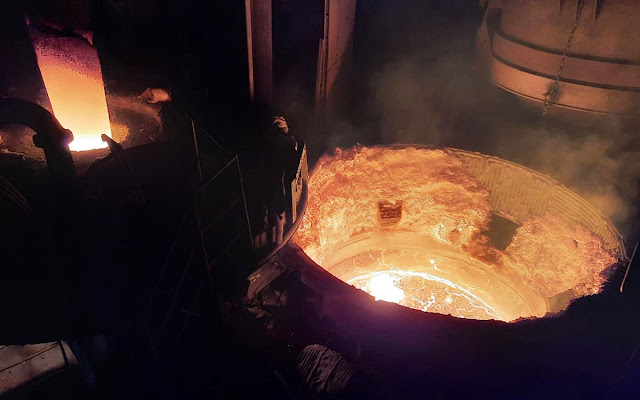
induction furnace

2. The Difference in Material Selection

Furnace shell and yoke: for the selection of the shell of aluminum shell furnace, the weight of the shell of a standard 1-ton aluminum shell furnace is 400kg of cast aluminum alloy, and the thickness is 40mm. The shell of some manufacturers is often insufficient in weight and thickness; The most important thing for a steel shell furnace is the selection of yoke. For the same type of steel shell electric induction furnace, the selection of yoke is different, and the price difference is very big. Generally, it should be made of a brand-new Z11 cold-rolled silicon steel sheet with high permeability. The thickness of the silicon steel sheet is 0.3mm, and the profiling structure is adopted. The inner arc surface and the outer arc of the induction coil are the same, so that the yoke can be close to the outside of the induction coil, The yoke is clamped by stainless steel plate and stainless steel on both sides, fixed by welding and cooled by water.

Copper tube and copper bar: the core of the smelting furnace is an induction coil. The effect and price of cold extrusion copper tube and casting copper tube are far different. T2 cold extruded copper tube with huge cross-section should be used. The surface insulation treatment of copper tube adopts electrostatic spraying to achieve class H insulation. In order to protect its insulation strength, mica tape and alkali-free glass ribbon are wound and wrapped on the surface respectively once, and then moisture-proof insulating enamel paint is applied. There is a certain gap between the turns of the coil. When applying the fire-resistant mortar in the coil, the fire-resistant mortar should penetrate into the gap to strengthen the adhesion of the mortar on the coil. After the fire-resistant mortar is built, the inner surface is smooth to facilitate the removal of the furnace lining to protect the coil. Several turns of stainless steel water-cooling rings are added at the upper and lower ends of the coil to increase the overall rigidity and heat dissipation.

Silicon controlled rectifier: the quality of silicon controlled rectifier used by various manufacturers is generally uneven. The silicon-controlled rectifier with good quality has good temperature sensitivity, fast response and low failure rate.

Power cabinet: regular manufacturers use standard spray plate cabinet shell. Instead of tin paint cabinet shell. And the size of the power cabinet is standard. Irregular manufacturers power cabinet also shrunk, height, width and thickness is not enough, and even some reactor placed outside the power cabinet. Regular manufacturers of intermediate frequency power supply are equipped with a low-voltage switch, users do not need to configure another voltage switch cabinet.

Capacitor: the most important thing for the capacitor cabinet for reactive power compensation is that it must be equipped with a sufficient quantity, which is generally the compensation value of the capacitor. The capacitor is 18-0 times of the power supply, that is, the capacitance compensation (kvar) = (20-18) x power supply.

Reactor: the main material of the reactor is a silicon steel sheet. New products produced by regular manufacturers should be selected instead of recycled second-hand silicon reactor steel sheets.

intermediate frequency furnace

How to Reduce the Power Consumption of Electric Induction Furnace?

1. Reasonable Batching

The scientific management of medium frequency furnace charge is of great significance to improve the production efficiency and reduce the energy consumption of electric induction furnace. It is necessary to master the chemical composition of all kinds of charge used, carry out careful and reasonable burden calculation, and make use of the reasonable collocation of all kinds of charge to ensure that the main chemical composition of liquid steel meets the requirements, and the content of harmful impurity elements is as little as possible and does not exceed the standard. Avoid delaying smelting time due to adjusting composition, eliminate a scrap of liquid steel due to unqualified composition, and increase material and power consumption. Therefore, the burden should be properly classified according to the chemical composition, impurity content and block size. Large and long scrap should be cut, and light and thin scrap should be packed if possible to ensure smooth charging and reduce smelting time. The lump size of the burden should be adapted to the power frequency. The power frequency of the induction furnace decreases with the increase of furnace capacity. Therefore, the bulk charge can be used for large capacity induction furnaces and small charge can be used for small capacity electric induction furnace.

2. Reasonable Layout And Operation

On the premise of ensuring the reasonable operation of workers, the overall layout of the electric furnace should try to reduce the space layout, so that the overall connection line will be shortened, so as to reduce the loss of heat and electricity, so as to achieve the purpose of saving electricity. The hot metal quantity of medium frequency furnace should be more than 25t and more than 5 heats. Because the drying time of the electric induction furnace must be 2 ~ 2.5h, the lining material can meet the requirements, and the power consumption of the drying furnace is about 1000kW·h. The amount of molten iron has nothing to do with the drying time. Moreover, the more the number of smelting furnaces, the more energy can be saved when the added iron is preheated by using the waste heat of intermediate frequency furnace after discharging. The average smelting time saved for each furnace is 15 ~ 20 min, and the electric energy saved is 600 kW·H.

3. Standard Smelting Process

3.1 Improve the Loading Operation Regulations

① Remove Debris

Before the iron is put into the electric induction furnace, the operator must remove the dust, sand, slag and other impurities attached to the iron. Usually, the iron burden carries about 1% (50 ~ 55kg) of dust, sand, slag and other non-metallic materials, which will cause about 50 kW·h power loss and increase the difficulty of slag removal operation. In serious cases, it will cause burden crusting and shed burden, affect smelting, and greatly increase power loss.

② Feeding in Sequence

When feeding, the new iron turtleback should be added along the furnace wall, and the long material should be fed into the furnace vertically. It is strictly forbidden to pour the whole bucket of material into the furnace. First, add a low melting point charge, then put a high melting point charge. In order to improve the melting efficiency, the burden should be as dense as possible, but there should be a loose gap between the burden and the furnace wall. If it is necessary to add carbon, the charging sequence is as follows: put the carburizing agent into the bottom of the electric induction furnace, add the iron back to the furnace, and then add the scrap. Note that the carburizer can be added in batches, but the amount of each addition should not exceed 50kg and should not be compacted. The charging sequence of the remaining molten iron is as follows: the carburizer is put at the bottom of the furnace, the iron is added back to the furnace, and the molten iron is poured into the furnace when the charge added into the furnace is red hot. When the smelter poured the molten iron back, he found that the molten iron was going to cover the charge, he had to stop pouring it back, and the charging must be continued, and then the remaining molten iron can be poured into the furnace, taking that the molten iron did not cover the charge surface as the criterion.

3.2 Perfect Smelting Process

After charging, the charge is electrified and melted. First, low power (current 1200A) is melted for 10min, and then the current is increased to 2800a to work at full load. During the melting process, an infrared thermometer is used to detect the temperature change of main components such as silicon-controlled rectifier every 20 ~ 30 min, and the rated temperature of temperature operation (115 ℃) is found. The power is cut off in time for inspection, and the power is turned on after the faults and hidden dangers are eliminated. When the burden melts, the operator should not leave the operation platform but should poke the burden while melting and add the burden to prevent the burden from setting up a shed and crusting on the surface of hot metal. When the bottom charge is melted, the upper charge will sink slowly. If the upper charge does not sink in 5 ~ 10 minutes, it should be observed immediately whether the charge is covered or whether the surface of hot metal crusts. If the burden is shed and crusted, the power should be reduced by 20% to make the burden fall naturally; 30% to 40% power ° For smelting, tilt back the electric induction furnace body every 3 ~ 5 min to observe whether there is molten iron melting out. When the molten iron is seen, add a clean burden and remove slag from the penetration.

medium frequency furnace

How to Remove Dust from Electric Induction Furnace?

Generally speaking, the dust removal work of the electric induction furnace is completed by the intermediate frequency furnace dust collector. The flue gas capture system of the intermediate frequency furnace is composed of low-position mobile dust collecting hood, feeding equipment, steel tapping equipment and dust removal equipment. The low-position mobile dust collecting hood covers the operation platform and the tapping pit, so that the smelting and production process of the intermediate frequency furnace is all carried out in the low-position mobile dust collecting hood, and the whole process of flue gas is captured. When feeding, the feeding equipment is used for feeding, and the material is filled up several times according to the production needs, which solves the problem of difficult to capture flue gas during driving and feeding; when the steel is tapped, the electric induction furnace platform flips directly out to the tapping track flat car. In the ladle, the tapping process is completed in the fume hood, which overcomes the partial leakage of the flue gas during the tapping of the partial dust collection hood.

The bag filter of the intermediate frequency furnace is composed of a shell, a filter bag, an ash hopper, an ash discharge device, a bracket, and a pulse cleaning system. When the dust-laden gas enters the dust collector from the air inlet, it first hits the inclined partition in the middle of the air inlet, and the airflow turns to flow into the ash hopper. At the same time, the airflow speed slows down. Due to gravity sedimentation, the coarse particles in the gas fall directly. Into the ash bucket, play a role in pre-collecting dust. The airflow entering the ash hopper then folds upwards and passes through the filter bag with a metal frame inside. The dust is trapped on the outer surface of the filter bag. The purified gas enters the cleanroom at the upper part of the filter bag chamber and is collected in the air outlet pipe for discharge.

The dust collector of the electric induction furnace is economical and practical, simple in structure, easy to install and easy to maintain. Mainly used for dust collection at small dust points. The machine uses polyester needle-punched felt-coated cloth bags. The inlet temperature is about 120 degrees Celsius, and the dust removal effect can reach 99%.

induction melting furnace

What Is the Difference Between Electric Induction Furnace and Electric Arc Furnace?

1. Application Area

Electric arc furnace is a kind of electric furnace which uses high temperature produced by electrode arc to smelt ore and metal. For metal smelting, EAF has greater process flexibility than other steelmaking furnaces, which can effectively remove impurities such as sulfur and phosphorus. The furnace temperature is easy to control, and the equipment covers a small area, which is suitable for smelting high-quality alloy steel. Electric arc furnace has large volume and high equipment investment, usually more than 3 tons. Therefore, EAF is only used by enterprises of a certain scale.

The magnetic field of an electric induction furnace has a magnetic stirring effect on molten metal, which is beneficial to the uniformity of composition and scum. The installation and operation of an intermediate frequency furnace is very convenient. The furnace body with different weights, materials and starting mode can be easily replaced to meet various smelting requirements. An intermediate frequency furnace is suitable for all kinds of metal smelting and casting process. Compared with electric arc furnace, electric induction furnace has lower cost and is suitable for small and medium-sized enterprises.

2. Phosphorus, Sulfur and Deoxidation Capacity

Electric arc furnace is superior to medium frequency furnace in phosphorus removal, desulfurization and deoxidation. An electric induction furnace is a kind of cold slag whose temperature is maintained by the heat provided by molten steel. Electric arc furnace is hot slag, which is heated by the electric arc, dephosphorization and desulfurization can be completed by slag, and diffusion deoxidation is completely carried out by slag. Therefore, the ability of phosphorus removal, desulfurization and deoxidation of EAF is better than that of MF.

3. Nitrogen Content

The content of nitrogen in steel produced by EAF is higher than that by MF because nitrogen molecules in the air of the high-temperature zone of EAF are ionized into atoms and absorbed by molten steel. The nitrogen content of the alloy melted in the electric induction furnace is lower than that in the electric arc furnace, but the oxygen content is higher than that in the electric arc furnace. The rapid life of the alloy is higher than that of the EAF.

4. Burning Rate

When smelting in a medium frequency furnace, the alloy elements in the returned material can be effectively recovered. In the process of EAF smelting, the alloy elements in the returned materials are firstly oxidized into the slag, and then reduced to molten steel from the slag. At high arc temperature, the loss of volatilization and oxidation of elements increases obviously, and the burning loss rate increases obviously. The burning rate of alloy elements in an electric induction furnace is lower than that in electric arc furnaces, especially in charging and returning materials.

5. Carbon Increase

Electric induction furnace is based on the principle of induction heating to melt metal charge without carbon enrichment in molten steel. EAF relies on graphite electrodes to pass through EAF material, and molten steel will be enriched in carbon. Under normal conditions, the carbon content of high alloy Ni Cr steel is 0.06% in EAF and 0.020% in MF. The amount of carbon added in EAF is 0.020%, and that in MF is 0.010%.

6. Data Control

In electric induction furnace smelting, adjusting temperature, refining time, stirring intensity and maintaining a constant temperature ratio are more convenient in an electric arc furnace, and can be carried out at any time. It plays an important role in smelting high alloy steel and alloy. It can be produced independently or by the double process of secondary refinings, such as electroslag remelting and vacuum self-consumption. Therefore, nonvacuum electric induction furnace melting has become an important melting method for the production of special steels and alloys such as high-speed steel, heat-resistant steel, stainless steel, electrothermal alloy, precision alloy and superalloy, and has been widely used.

If you are interested in the electric induction furnace, please mail at marketing2@hanrm.com for your solution.


More Articles You May Be Interested In:

Short-process Electric Furnace Steelmaking and Continuous Casting

Important Cautions for Use of Intermediate Frequency Furnaces

Energy-Saving Technology for Heat Treatment of Induction Furnace

Roller Hearth Reheating Furnace

Classification of Electric Arc Furnace

Melting Features of Medium Frequency Electric Furnace

Electric Arc Furnace VS Intermediate Frequency Furnace

Why Intermediate Frequency Furnace cannot be Turned on Normally?

Energy-Saving Technology for Heat Treatment of Induction Furnace

Cause Analysis and Solution of Induction Coil Blocking in Medium Frequency Smelting Furnace

Characteristics of Electric Arc Furnace Steelmaking

What is Induction Furnace?

Significance of Reheating Technology in Rolling Reheating Furnace

How to Improve the Thermal Efficiency of the Reheating Furnaces?

What is the Reheating Furnace Temperature System?

The Advantage of Induction Furnace (Medium Frequency Furnace)

On the Advantage and Disadvantage of Electric Arc Furnace and Induction Furnace

Four Processes of High-speed Steel Manufacturing

High-speed steel can be divided into traditional casting technology, electro slag remelting technology, powder metallurgy technology, and sp...